-
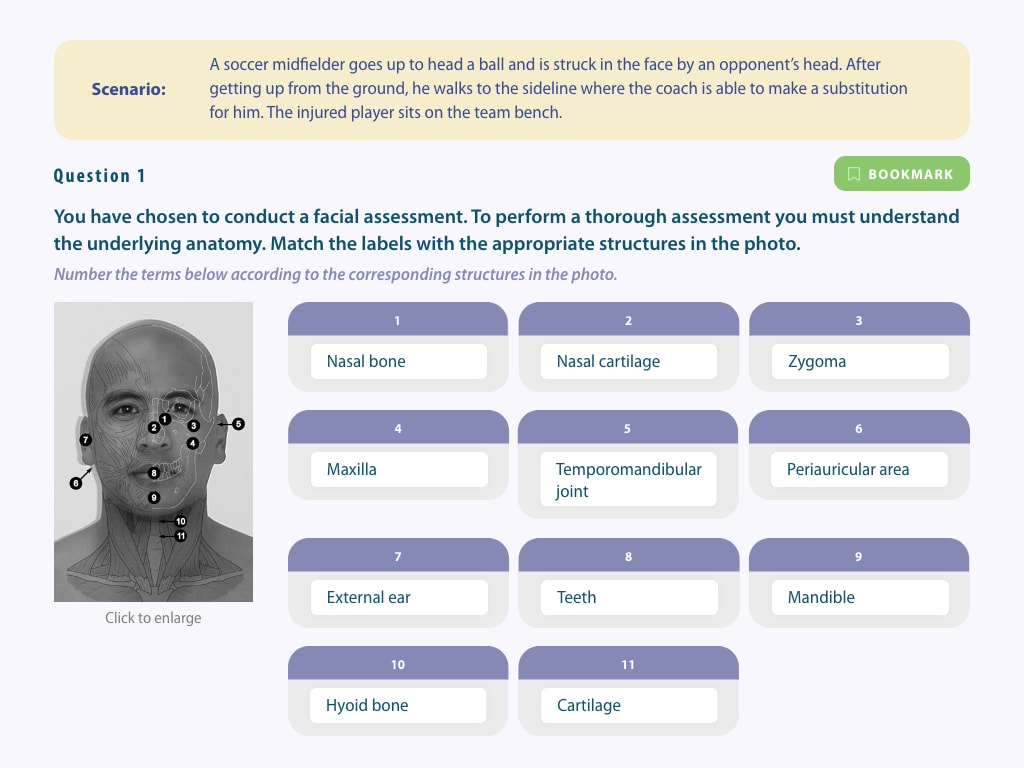
External ear
-
Zygoma
-
Hyoid bone
-
Cartilage
-
Nasal bone
-
Teeth
-
Mandible
-
Nasal cartilage
-
Maxilla
-
Temporomandibular joint
-
Periauricular area
Scenario:
A soccer midfielder goes up to head a ball and is struck in the face by an opponent's head. After getting up from the ground, he walks to the sideline where the coach is able to make a substitution for him. The injured player sits on the team bench.
Question 1
You have chosen to conduct a facial assessment. To perform a thorough assessment you must understand the underlying anatomy. Match the labels with the appropriate structures in the photo.
Number the terms below according to the corresponding structures in the photo.
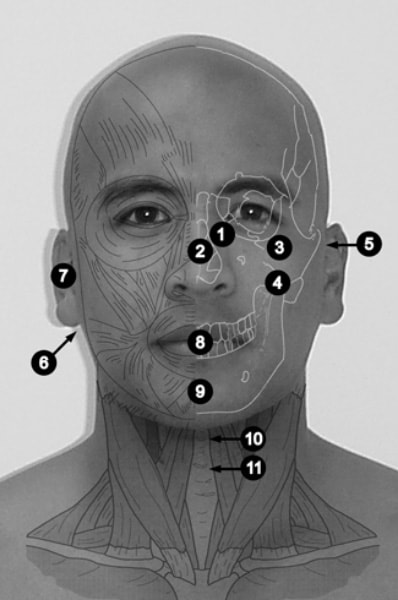
Click to enlarge
1
2
3
4
5
6
7
8
9
10
11
Scenario:
A soccer midfielder goes up to head a ball and is struck in the face by an opponent's head. After getting up from the ground, he walks to the sideline where the coach is able to make a substitution for him. The injured player sits on the team bench.
Question 2
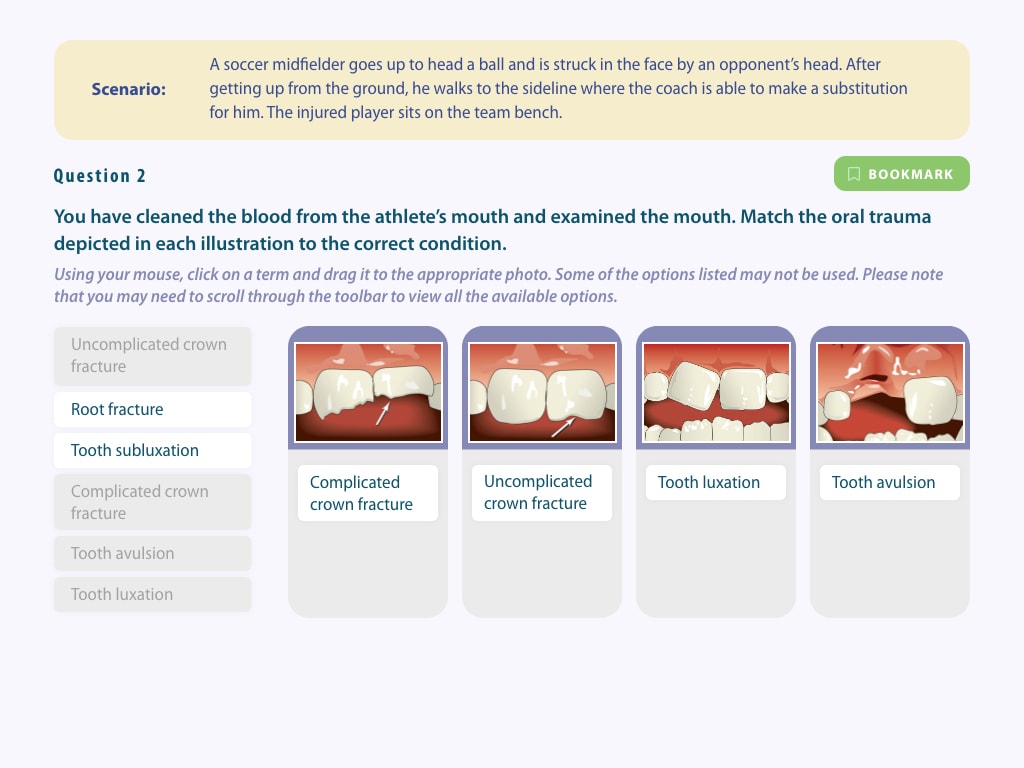
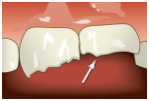
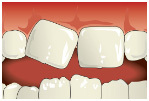
You have cleaned the blood from the athlete's mouth and examined the mouth. Match the oral trauma depicted in each illustration to the correct condition.
Using your mouse, click on a term and drag it to the appropriate photo. Some of the options listed may not be used. Please note that you may need to scroll through the toolbar to view all the available options.
-
Uncomplicated crown fracture
-
Root fracture
-
Tooth subluxation
-
Complicated crown fracture
-
Tooth avulsion
-
Tooth luxation


Scenario:
A soccer midfielder goes up to head a ball and is struck in the face by an opponent's head. After getting up from the ground, he walks to the sideline where the coach is able to make a substitution for him. The injured player sits on the team bench.
Question 3
During your off-field examination, you perform the test depicted in the photo. What does a positive test imply?

Click to enlarge
Maxillary fracture
Temporomandibular joint dysfunction
Oral malocclusion
Zygomatic arch fracture
Mandibular fracture
Scenario:
A soccer midfielder goes up to head a ball and is struck in the face by an opponent's head. After getting up from the ground, he walks to the sideline where the coach is able to make a substitution for him. The injured player sits on the team bench.
Question 4
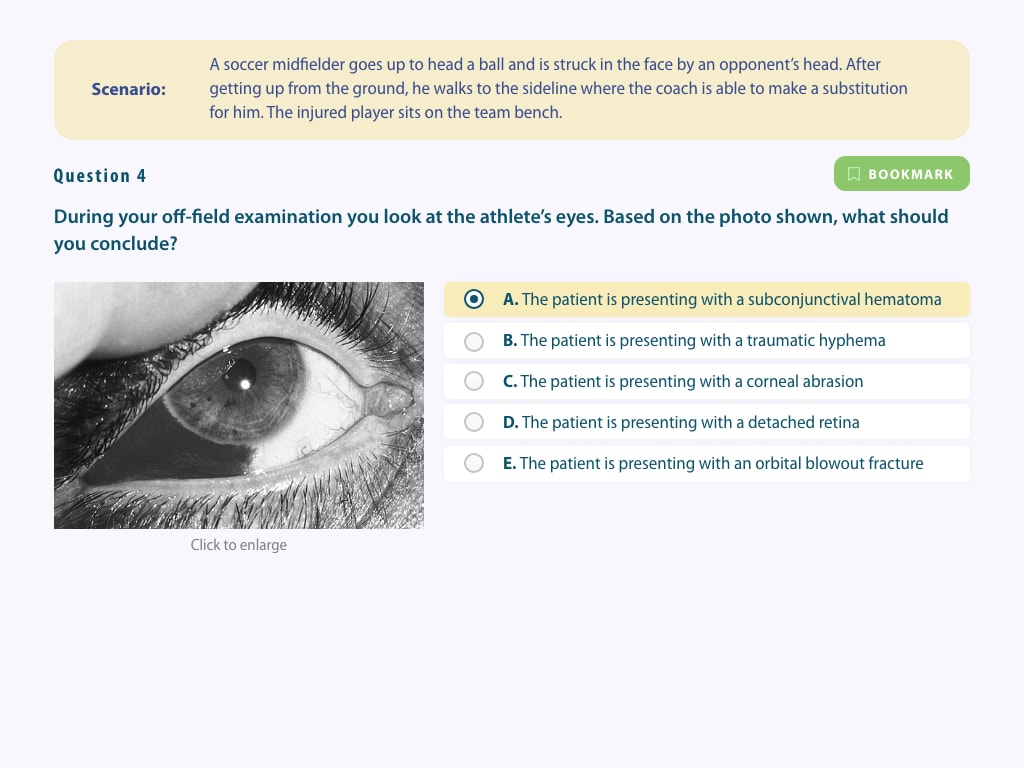
During your off-field examination you look at the athlete's eyes. Based on the photo shown, what should you conclude?
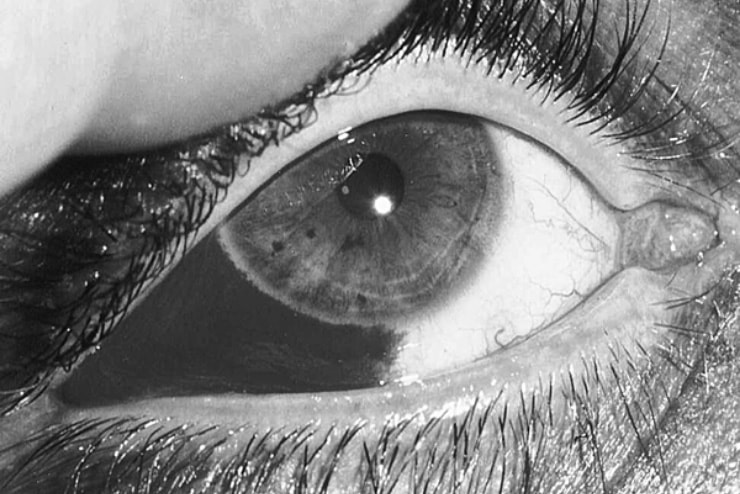
Click to enlarge
The patient is presenting with a subconjunctival hematoma
The patient is presenting with a traumatic hyphema
The patient is presenting with a corneal abrasion
The patient is presenting with a detached retina
The patient is presenting with an orbital blowout fracture
Scenario:
A soccer midfielder goes up to head a ball and is struck in the face by an opponent's head. After getting up from the ground, he walks to the sideline where the coach is able to make a substitution for him. The injured player sits on the team bench.
Question 5
You have examined the athlete's eye and noted that he has sustained a subconjunctival hematoma. To determine the presence of additional trauma what questions should you ask?
Select all that apply.
Prompt
Response
"Are you wearing contact lenses?"
"No. I have 20/20 vision."
(While holding up two fingers) "Can you tell how many fingers I am holding up?"
"I can see the two fingers, but it is blurry."
"Can you read the scoreboard on the other side of the field?"
"Yes, but it is blurry and I keep seeing white stuff floating in front of my eyes."
"Do you feel like you have something in your eye?"
"No. Just my face and my eye hurt from the hit."
"Is the sunlight bothering you?"
"No, not really."
"Do you feel increased pressure in your eye?"
"No. Should I?"
"As I move my fingers from behind you along the sides of your head, tell me when you first see my fingers."
"I can see the finger on the right but not the one on the left."
Scenario:
A soccer midfielder goes up to head a ball and is struck in the face by an opponent's head. After getting up from the ground, he walks to the sideline where the coach is able to make a substitution for him. The injured player sits on the team bench.
Question 6
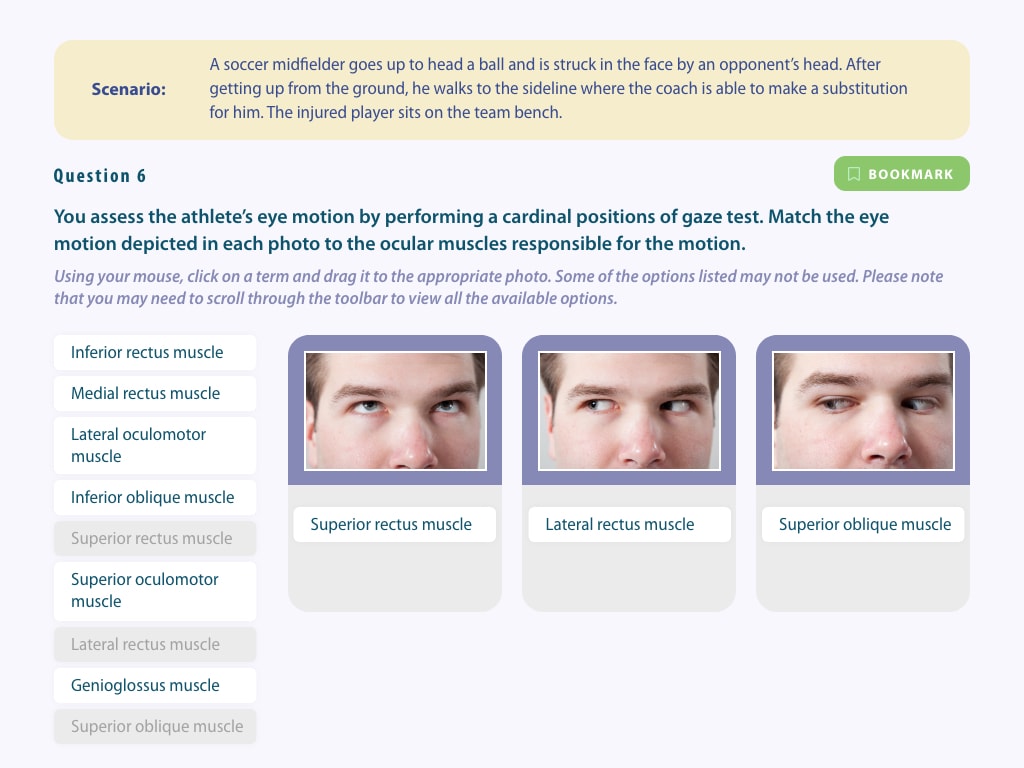
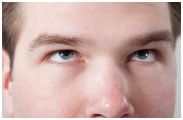
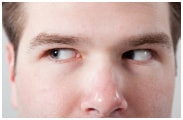
You assess the athlete's eye motion by performing a cardinal positions of gaze test. Match the eye motion depicted in each photo to the ocular muscles responsible for the motion.
Using your mouse, click on a term and drag it to the appropriate photo. Some of the options listed may not be used. Please note that you may need to scroll through the toolbar to view all the available options.
-
Inferior rectus muscle
-
Medial rectus muscle
-
Lateral oculomotor muscle
-
Inferior oblique muscle
-
Superior rectus muscle
-
Superior oculomotor muscle
-
Lateral rectus muscle
-
Genioglossus muscle
-
Superior oblique muscle

|
Question Number |
Your Score |
Possible Score |
Answer Key |
|---|---|---|---|
|
1 |
0 |
11 |
|
|
2 |
0 |
4 |
|
|
3 |
0 |
1 |
|
|
4 |
0 |
1 |
|
|
5 |
0 |
4 |
|
|
6 |
0 |
3 |
|
|
Total Points |
0 |
24 |
|
|
Percentage |
|
||