Scenario:
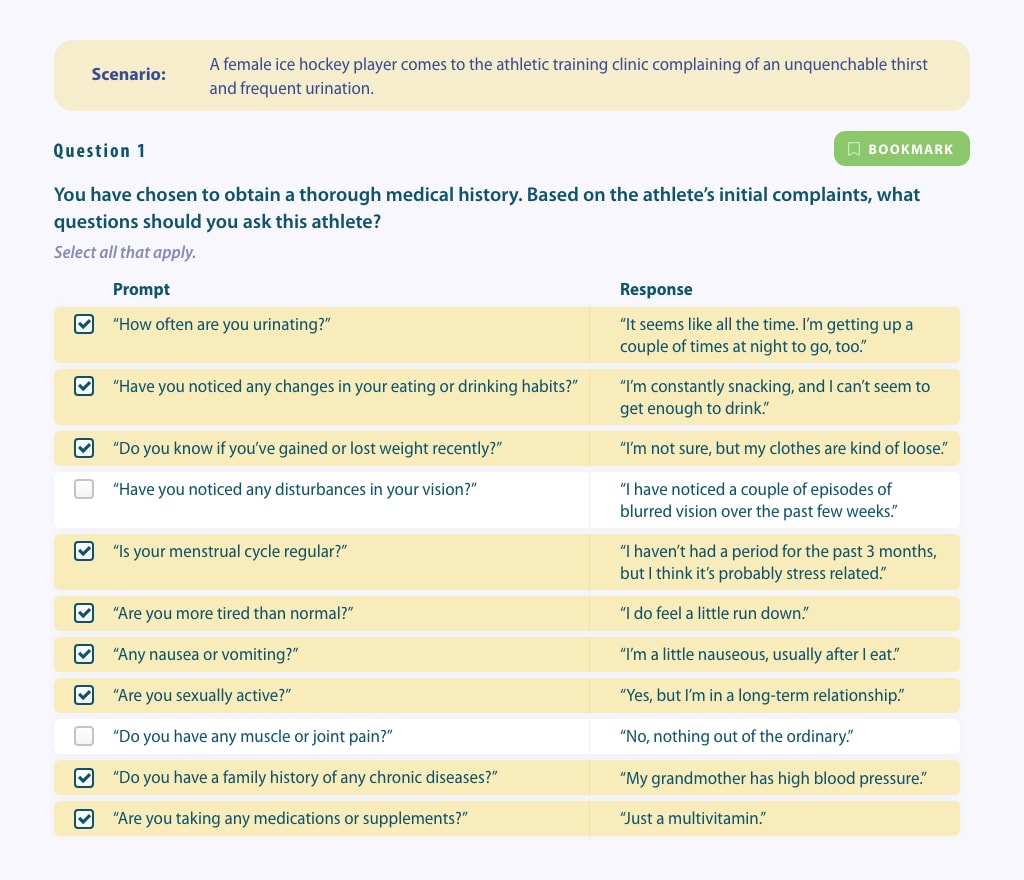
Question 1
Select all that apply.
Prompt
Response
"How often are you urinating?"
"It seems like all the time. I'm getting up a couple of times at night to go, too."
"Have you noticed any changes in your eating or drinking habits?"
"I'm constantly snacking, and I can't seem to get enough to drink."
"Do you know if you've gained or lost weight recently?"
"I'm not sure, but my clothes are kind of loose."
"Have you noticed any disturbances in your vision?"
"I have noticed a couple of episodes of blurred vision over the past few weeks."
"Is your menstrual cycle regular?"
"I haven't had a period for the past 3 months, but I think it's probably stress related."
"Are you more tired than normal?"
"I do feel a little run down."
"Any nausea or vomiting?"
"I'm a little nauseous, usually after I eat."
"Are you sexually active?"
"Yes, but I'm in a long-term relationship."
"Do you have any muscle or joint pain?"
"No, nothing out of the ordinary."
"Do you have a family history of any chronic diseases?"
"My grandmother has high blood pressure."
"Are you taking any medications or supplements?"
"Just a multivitamin."
Scenario:
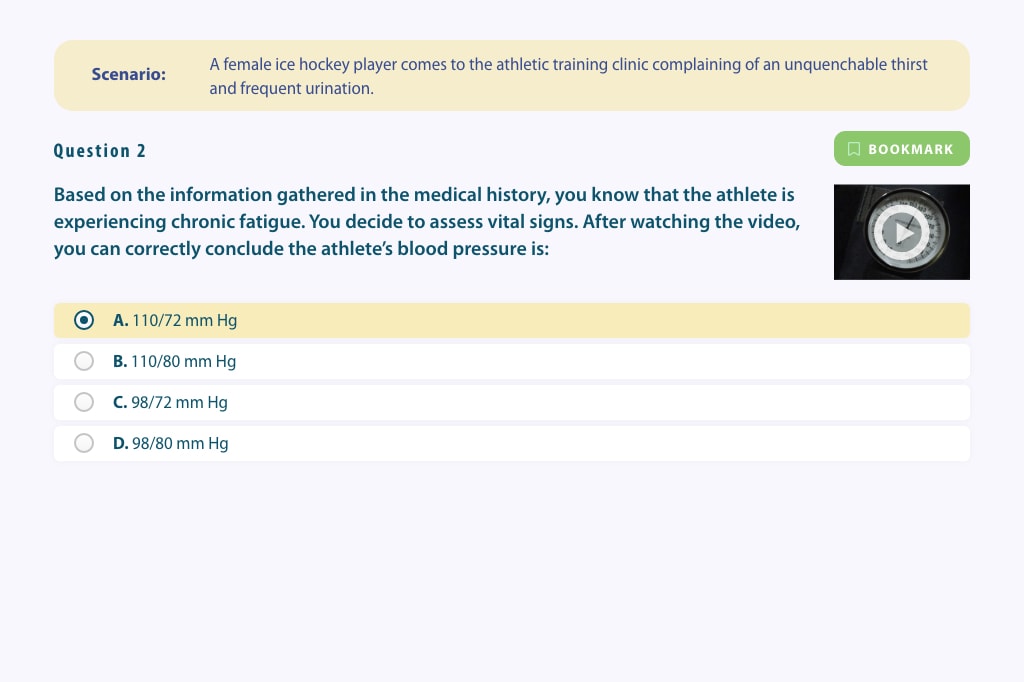
Question 2
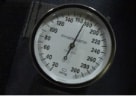
Click to enlarge
110/72 mm Hg
110/80 mm Hg
98/72 mm Hg
98/80 mm Hg
Scenario:
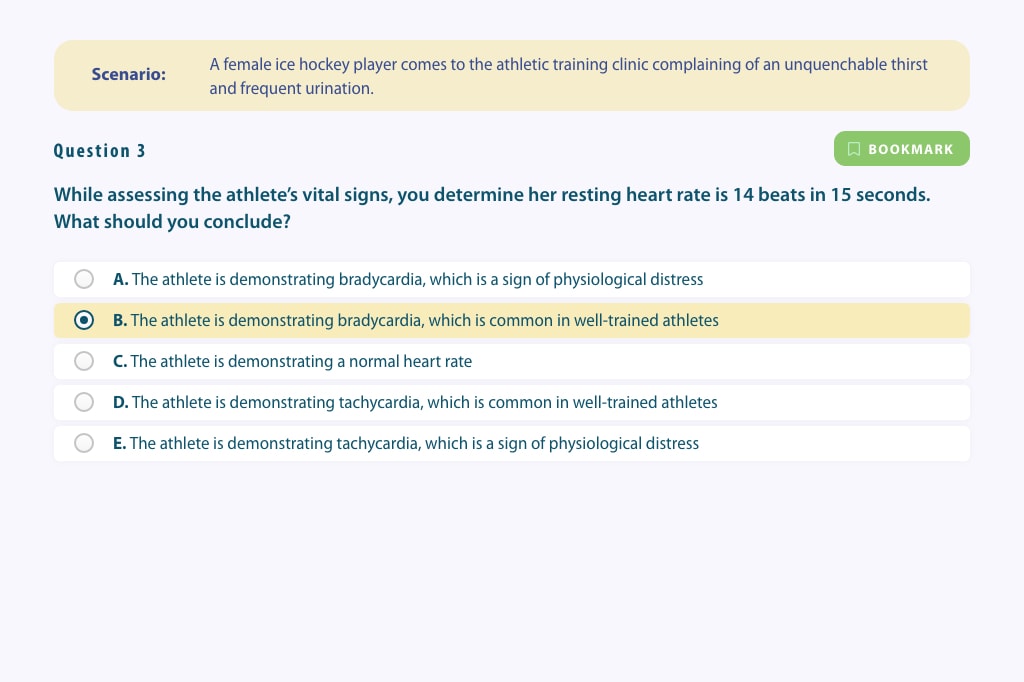
Question 3
The athlete is demonstrating bradycardia, which is a sign of physiological distress
The athlete is demonstrating bradycardia, which is common in well-trained athletes
The athlete is demonstrating a normal heart rate
The athlete is demonstrating tachycardia, which is common in well-trained athletes
The athlete is demonstrating tachycardia, which is a sign of physiological distress
Scenario:
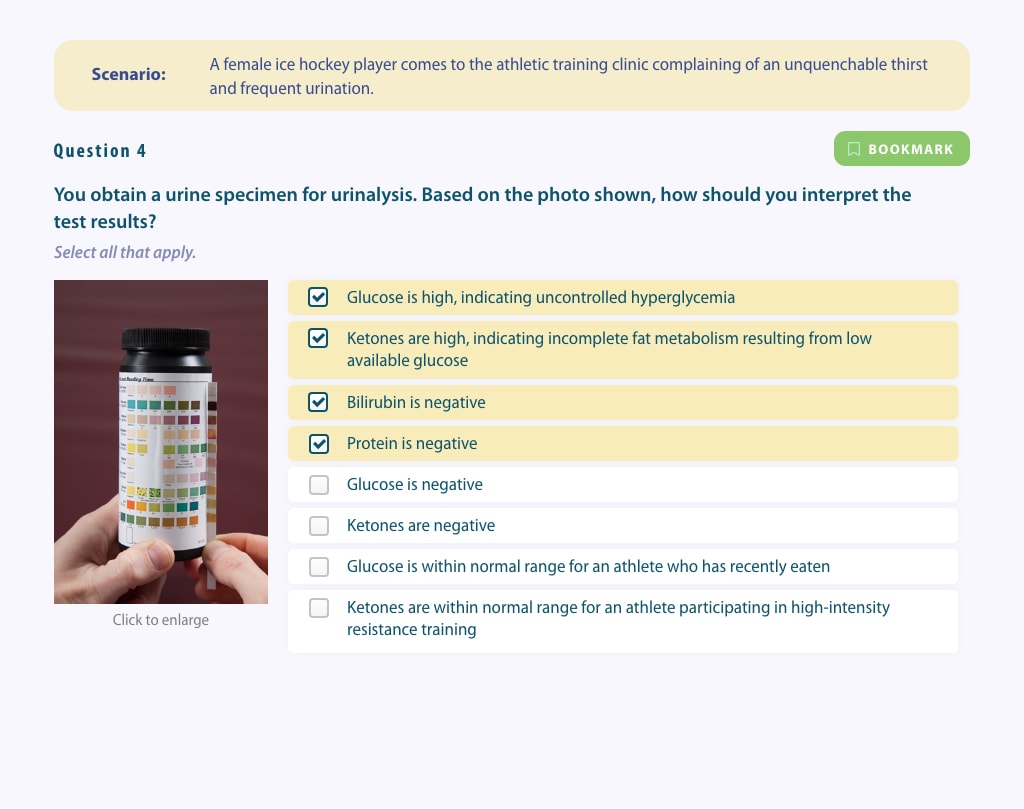
Question 4
Select all that apply.
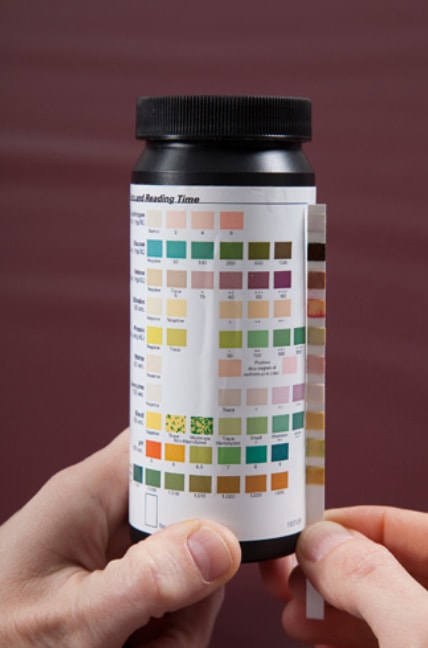
Click to enlarge
Glucose is high, indicating uncontrolled hyperglycemia
Ketones are high, indicating incomplete fat metabolism resulting from low available glucose
Bilirubin is negative
Protein is negative
Glucose is negative
Ketones are negative
Glucose is within normal range for an athlete who has recently eaten
Ketones are within normal range for an athlete participating in high-intensity resistance training
|
Question Number |
Your Score |
Possible Score |
Answer Key |
|---|---|---|---|
|
1 |
0 |
9 |
|
|
2 |
0 |
1 |
|
|
3 |
0 |
1 |
|
|
4 |
0 |
4 |
|
|
Total Points |
0 |
15 |
|
|
Percentage |
|
||