Focused Testlet 9

RETURN TO MENU
TIME: 00:00:00
PREV

Question 1 of 5

NEXT

Scenario:

You receive a call from your team physician alerting you that the female equestrian athlete you had referred to him has been diagnosed with type 1 diabetes mellitus.

Question 1

BOOKMARK
How will you best explain this diagnosis to the athlete?

Select all that apply.

A significant amount of education and effort will be required to manage this disease

The pancreas is not secreting enough insulin

Management of the disease will require using exogenous insulin

There are immediate and long-term health implications associated with this disease

The pancreas is secreting enough insulin, but the cells are resistant to it

Exogenous insulin is not needed because this disease can be managed with exercise and proper diet

There is currently no cure for this disease

Scenario:

You receive a call from your team physician alerting you that the female equestrian athlete you had referred to him has been diagnosed with type 1 diabetes mellitus.

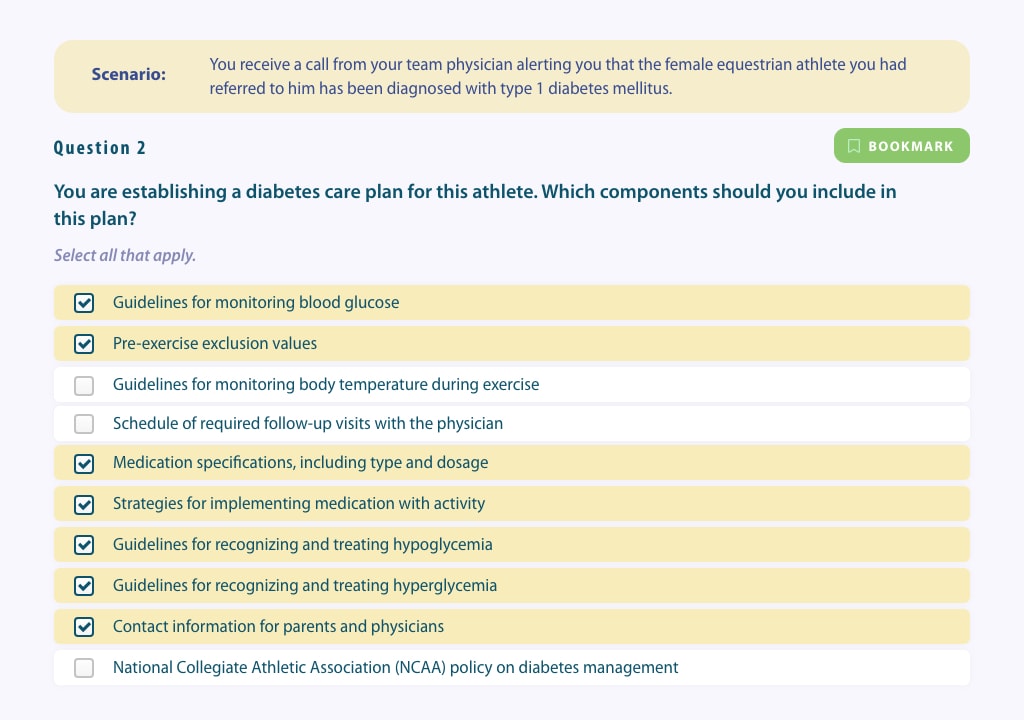
Question 2

BOOKMARK
You are establishing a diabetes care plan for this athlete. Which components should you include in this plan?

Select all that apply.

Guidelines for monitoring blood glucose

Pre-exercise exclusion values

Guidelines for monitoring body temperature during exercise

Schedule of required follow-up visits with the physician

Medication specifications, including type and dosage

Strategies for implementing medication with activity

Guidelines for recognizing and treating hypoglycemia

Guidelines for recognizing and treating hyperglycemia

Contact information for parents and physicians

National Collegiate Athletic Association (NCAA) policy on diabetes management

Scenario:

You receive a call from your team physician alerting you that the female equestrian athlete you had referred to him has been diagnosed with type 1 diabetes mellitus.

Question 3

BOOKMARK
The athlete reports to the athletic training room and tells you she ate lunch approximately 2 hours ago. She just checked her blood glucose levels and the glucometer reading was 203 mg/dL. How would you interpret these results?

Blood glucose level indicates impaired glucose tolerance

Blood glucose level indicates normal physiological glucose management

Blood glucose level indicates uncontrolled diabetes

Blood glucose level indicates the athlete is hypoglycemic

Scenario:

You receive a call from your team physician alerting you that the female equestrian athlete you had referred to him has been diagnosed with type 1 diabetes mellitus.

Question 4

BOOKMARK
You are educating the athlete on recognizing the signs and symptoms of uncontrolled blood glucose levels. Identify the signs and symptoms that apply to hyperglycemia, hypoglycemia, or both conditions.

Using your mouse, click on a sign or symptom and drag it to the appropriate column.

  • Coma

  • Polydipsia

  • Weight loss

  • Polyphagia

  • Polyuria

  • Tachycardia

  • Behavior changes/irritability

  • Hyperventilation

  • Nausea

  • Shakiness

Hyperglycemia Only

Hypoglycemia Only

Hyperglycemia and Hypoglycemia

Scenario:

You receive a call from your team physician alerting you that the female equestrian athlete you had referred to him has been diagnosed with type 1 diabetes mellitus.

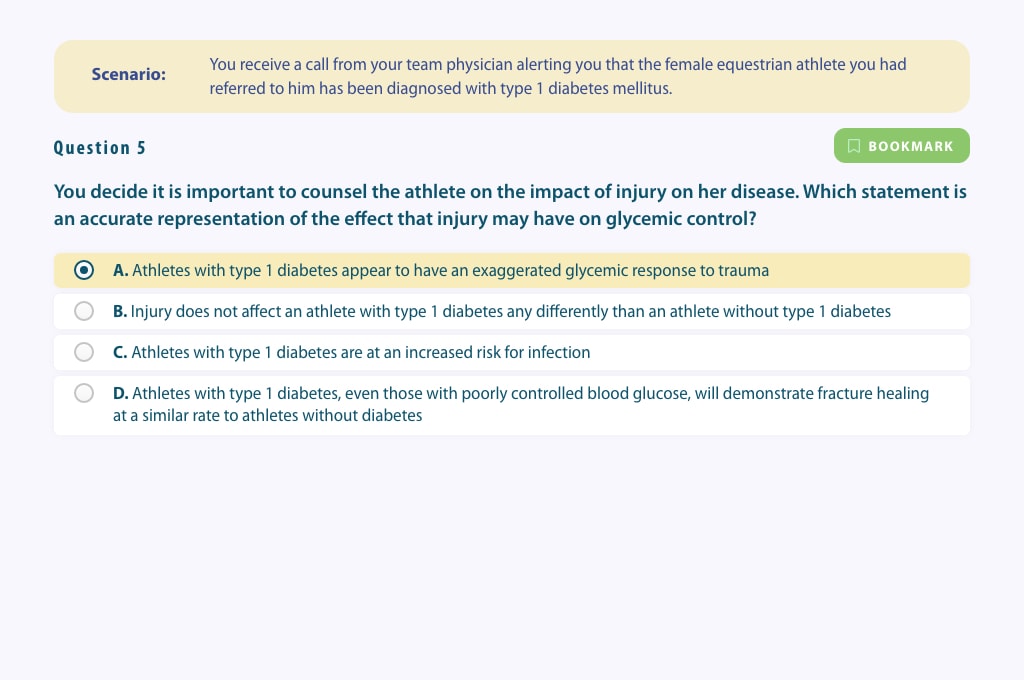
Question 5

BOOKMARK
You decide it is important to counsel the athlete on the impact of injury on her disease. Which statement is an accurate representation of the effect that injury may have on glycemic control?

Athletes with type 1 diabetes appear to have an exaggerated glycemic response to trauma

Injury does not affect an athlete with type 1 diabetes any differently than an athlete without type 1 diabetes

Athletes with type 1 diabetes are at an increased risk for infection

Athletes with type 1 diabetes, even those with poorly controlled blood glucose, will demonstrate fracture healing at a similar rate to athletes without diabetes

STUDENT NAME:

DATE COMPLETED:

TIME TRACKED:

Question Number

Your Score

Possible Score

Answer Key

1

0

5

View Answer Key

2

0

7

View Answer Key

3

0

1

View Answer Key

4

0

10

View Answer Key

5

0

1

View Answer Key

Total Points

0

24

Percentage

PRINT RESULTS
NEXT TESTLET